FIRST Robotics Competition
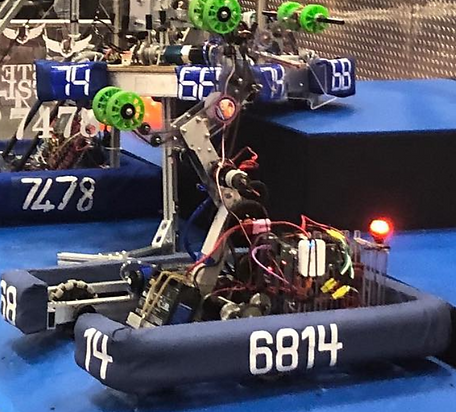
2019: Epimethius
Timeline: 6 Weeks
As a freshman, my role on the team was small, and I didn't have a large hand in the robot design. I helped on the arm design and ended up becoming the 3D printing manager for the team. This was where I started learning more advanced CAD, and my skills in design and manufacturing grew alongside. Another aspect I ended up enjoying was scouting and match strategy, and I carry that enjoyment of crunching numbers with me to this day. This robot ended up winning the Engineering Inspiration award at one event, winning another regional event, and having a winning record at the world championships.
2020: Chet XIX
Timeline: 6 Weeks
Joining a new team meant having a fresh start. I was able to come out strong as an experienced designer and got to work with the older team members on their more direct contributions to the robot. This year I got more comfortable with integration and higher level design to complement my more focused design work in the past. The main things I worked on in design were the climb functionality and the integration of all mechanisms with each other. I also got more chances to manufacture parts and learned how to use the team's CNC machine. On the nontechnical side, I started getting more involved in the local FRC community and became more well versed in strategy. This robot unfortunately never got to compete due to the pandemic.


2022: Reboot
Timeline: 6 Weeks
As the co-captain of the team and lead designer, this last robot was meant to be strong send off. I will be the first to admit that I possibly might have bitten off more than I could chew, designing a custom turret, custom shooter, and custom drivetrain. While these turned out fine and worked just as good as I could have hoped, this left parts of the robot to not get as much attention as they should have gotten, which meant reliability issues throughout competition. Working on this robot taught me a lot. On the engineering side, I got better at integration, I learned how to design more rigorously, and how to balance complexity and scope. On the non-technical side, I learned how to lead a team, I built and maintained relationships with other teams, and I learned how to communicate better. For me, this season was never about winning, but we did get to be semifinalists at the regional level, and I got to do that alongside a team whose I was very close with, which made it all the more of a personal win.